Tuesday, February 4, 2014

How to Stand out in the Upcoming Content Marketing Glut

By Paula Allen

content marketing trends

How to Stand Out in the Upcoming Content Marketing Glut was originally published on BruceClay.com, home of expert search engine optimization tips.


Content marketing: everybody’s doing it. In fact, a survey last year by Content Marketing Institute found:


  • 92% of marketers use content marketing, and

  • About 60% of marketers (both B2B and B2C) plan to increase their content budgets in coming months.


A portion of Content Marketing Institute’s “2014 Content Marketing Trends” infographic


More proof positive of the content glut marketers face is the simple Google Trends graph measuring the interest in the search term “content marketing”:


With all of this content coming down the pike, the challenge facing businesses and marketers is clear: If everyone starts doing content marketing, how can my brand stand out?


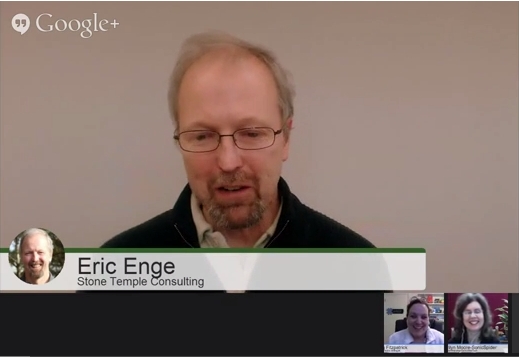
This was the topic of a Google+ Hangout last Thursday hosted by Eric Enge: “Thriving During the Upcoming Content Marketing Glut.” With Eric, guest speakers Peg Fitzpatrick and Marilyn Moore tackled this tough challenge for today’s small business owners and marketers.


If like me, you haven’t used Hangouts before, think webinar — live broadcast with speakers appearing through webcams and audience members typing comments — but with easier accessibility. You can join the audience right from Google+, watch the live comment stream, and see the show again anytime on YouTube, where it’s automatically saved. Being part of the live show was actually exciting, there was a real sense of community in the comments, and I made some new G+ friends.


Here I’ve highlighted takeaways for content marketers from this episode of theDigital Marketing Excellence Show. Host Eric Enge pitched a slow ball with his opening question, “What is content marketing?” But the speakers (and commenters, especially Kirstin Hancock) quickly sped up the play.


1. What Quality Content Looks Like


The show began with a familiar definition: “Content marketing is sharing the right content with the right people at the right time.” Then the speakers moved on to the more challenging question of what quality content should do:


  • Draw people in: According to Peg, if you’re just talking about yourself and your company, people won’t be interested. Create stuff that interests others.

  • Help: If it doesn’t give value, Marilyn said, “Delete it.”

  • Entertain: Peg pointed out that people go to Facebook and other social media sites during their free time. So be social and be entertaining.

  • Be brand appropriate: Make sure your humor is appropriate for your company and brand voice. As an example, for a dry cleaning chemicals company, Peg mixes some science humor into the content.

2. How Collaboration Can Help Create Content


The speakers agreed that collaboration can be a fun way to create content and let all parties reap the audience-engagement benefits. Collaboration, they said, can be:


  • Between brands: When two brands collaborate about something on social media, it creates an exciting “live” form of content marketing.

  • On Pinterest boards: Multiple people or businesses can all add items on a theme, and all get the benefit.

  • Multiple team members: If you have several staff posting for a brand, Marilyn said to make sure everyone is on the same page with a uniform brand voice and messaging (even while having their own personalities).

  • Partners: Eric mentioned that at Stone Temple Consulting, they partner with others to produce studies. It helps, he said, if the partners do not directly compete with each other.

3. How to Build a Community


The best content marketing brings an audience into the conversation. But how can marketers build a community?


  • Google+: You can literally start a “community” on this platform. Peg added that the way interaction flows on Google+ is better than on Facebook.

  • Blog comments: People interacting on your blog posts builds a sense of community.

  • Comment on others’ posts: Marilyn stressed that before you start posting your own content, you can start building relationships by showing interest in what others are saying by commenting on their posts. If you don’t develop an audience in this way first, no one will want to listen to you.

  • Never stop listening: Interaction shouldn’t begin and end with you.

  • Repost others’ content: Peg said to add some thoughts of your own at the top when you share a post.

  • Be an expert: Eric referred to an article he just published stressing the need to “have a unique voice and some authority” when you start putting content out there.

4. Be Authentic, If Not Original


Marilyn pointed out that small business owners may worry, “What can I say compared to the content the big brands in my niche can put out?” However, she explained that it’s okay to cover the same topic if you present your content in a unique way. She then quoted Ryan Hanley:


“Authenticity is mandatory. Originality is NOT.”


For example, teachers all teach the same material, but they present it differently. You want your target audience to read your content and say, “Oh, I get it now.” This concept is freeing for people who may not be at the thought leader level yet in their fields.


5. Don’t Steal Content, Whatever You Do


Before you start republishing content by competitors, the above advice came with a warning. Don’t use other people’s ideas without permission. Here are Peg and Eric’s qualifiers for reusing content:


  • Cite your inspirations: Peg keeps a running list at the bottom of blog posts she writes, citing all the articles she’s read on the topic that influenced her own content. Not just the sources she quoted, but also those that inspired her.

  • Image sources have to be cited, too: You should give photo credits on Google+ images. Eric said that even stock photos you license usually need attribution, unless you’ve bought a higher level of permission. For example, Eric said Stone Temple Consulting negotiated a higher level agreement with Shutterstock after people started picking up they Pinterest images and reposting them.

  • Pinterest images can’t be reused on your blog: Peg pointed out that this is a tricky thing, because on Pinterest everything seems to be “out there and free,” but it’s not.

Bottom line: the way you DON’T want to stand out is to be called out for using images or content unethically. As Peg quipped:


“Once you ruin your reputation, you can’t put the genie back in the bottle. So don’t do it.”


6. How to Keep Content Flowing


Eric said in industries where many experts are all constantly pumping out content, how can you keep fresh content flowing? Here’s a list of ways to spur unique, great ideas:


  • Hangouts: Have live conversations with people on Google+ and elsewhere.

  • Google+ comments: Get ideas and even quote commenters in your posts.

  • Repeat what worked before: Find older content that people liked and repurpose it in fresh ways.

  • Answer questions: Ask what you would want to know, or look at customer inquiries. Then answer the question.

  • Clear up misconceptions: Eric said sometimes he hears things that are so off-base, it motivates him to sit down and write a post to set the record straight.

  • Crowd sourcing: Generate ideas by asking a question and getting responses from a group.

  • Jot down ideas when you get them: The speakers all talked about keeping a notebook or other thing handy to capture the ideas as they come to them, whenever they come. Keep this list of “seeds” that you can write about later.


January 30th’s episode of the Digital Marketing Excellence Show with Eric Enge, Peg Fitzpatrick and Marilyn Moore can be viewed on YouTube.


7. How to Find Your Brand “Voice”


“When you find your own voice for you or your brand, that’s when your content is going to be the best.” – Peg Fitzpatrick

The most interesting part of the dialogue came at the end, when they discussed how a brand can find its voice for social media. The guests acknowledged that it took some time before they got comfortable conversing online. Here are their tips for settling into your “sweet spot” voice.


  • Let yourself be vulnerable: Peg said since it’s most natural to be in your own voice, “you just need to be you. You are putting yourself out there, but just do it.”

  • You don’t have to be a bubbly extrovert online: Marilyn suggests that being personable is important, and you get better over time. She admitted that as a newcomer to social media she was too formal, and people didn’t connect with her very well.

  • Be conversational: According to Marilyn, “I did need to loosen up and get more comfortable.” She did that by being conversational – not too heavy, not dumbed down, but just straightforward.

  • Think about what you would like reading: If it’s interesting to you, then people following you will find it interesting, too.

  • Choose three things to identify your voice and stick with them: Peg offered this super-practical tip — narrow down what your brand voice should be consistently, and mention them in your bio, reinforce them in your content (e.g., Peg’s three things are 1) social media, 2) marketing, and 3) positive).

  • Introverts are not at a disadvantage: Social media gives introverts the opportunity to “just be on when you want to be on,” according to Peg. Eric, a self-admitted introvert, agreed and added that, “Who you are is a lot more than are you bubbly or not.” Getting comfortable with what you think and can say about a subject is a first step.

  • Hangouts/videos are a challenge: Everyone is nervous at first about being on camera, but it gets easier.

  • Jump into Google+ comments: Don’t be afraid to make the jump into comment threads (that Nike slogan came out again here).

  • Be passionate and be an expert: Being an “expert” means more than just researching for 30 minutes in Google. You have to find what interests you, invest time to learn it, and look inside your own thoughts to create something better than anyone else that’s uniquely yours. As Eric summarized, “It doesn’t come for free.”

The small business owner’s perspective looking at content marketing might be “I don’t have time,” or “This was not what I signed up for when I went into business.” Marilyn said they simply don’t have a choice. Content marketing is “the name of the game now,” and businesses have to play the game by the rules. So she encouraged them to embrace it. Content marketing is “a wonderful opportunity to compete with companies of any size” that small businesses have never had before. Best of all, entry is free.


Source: Bruce Clay


How to Stand out in the Upcoming Content Marketing Glut

Monday, February 3, 2014

Well, This is Awkward…

By Phil Hollows


That day when a test mailing with placeholder (or, ahem, ‘dummy’) content was accidentally sent out to this blog’s readers. By its owner. By me.


Sorry, all. Mea culpa.


Phil


Source: Feedblitz


Well, This is Awkward…

Google Places Adds a Slew of Business Categories

By Chris Crum

Google is working on improving and expanding the business categories for Google Places For Business for countries around the world. In fact, they’re adding over 1,000 new categories in the Places dashboard.


Google Business community manager Jade Wang posted an announcement in the Google Product Forums (via Search Engine Roundtable), saying that the move comes based on feedback from merchants. She writes:


So you might be wondering: why hadn’t we already done that? Well, international business categorization is quite tricky. Imagine you’re planning a trip to Greece. When you search from the US, you’ll probably be using English, and you’ll see the categories of Greek businesses in English. However, those businesses in Greece were probably set in Greek using Places for Business in Greek. This means the Places for Business team has to translate and associate categories in many languages. As you can imagine, this can become very complicated very quickly.


Today, we are taking a first step of many to improve categories that merchants can use to represent their businesses. Specifically, we’re adding over 1,000 new categories in the new Places dashboard. These categories are available globally and translated to every language Google supports.


If you run a business page, you’re going to want to keep an eye on the categories, and change accordingly if you think you can do better than what you have now.


Image via Google


Source: WebPro News 2


Google Places Adds a Slew of Business Categories

Travel 360: a Unique Perspective on the Online Travel Industry for 2014

By Bas van den Beld

Travel 360 Banner 5

In the past few months State of Digital has been cooperating with Linkdex on the production of a unique E-book on the travel industry which today is officially released. The e-book gives us a unique perspective on the state of the online travel industry in 2014. This e-book is now available for everyone, here on State of Digital and with Linkdex, for free!


By collating the viewpoints and analysis of experts, thought leaders, and key commercial players of both industries, the report acts as a marker of the level of integration between travel brands and the various online channels within digital marketing in 2014. It explores and provides learned insights into what the important issues are currently, as well as future developments, and proceeds to infer and provide guidance in best practice for brands operating in the industry going forward.


The travel industry has changed dramatically over the years since the onset of digital. With ecosystem leaders building platforms, collecting data, and often encroaching downstream into specific travel verticals, brands need more than ever to stay ahead of the curve, reform and integrate business structures, and adopt agile frameworks to future-proof their businesses. Communicating a brand message which integrates across all digital channels, espousing core offline brand values that resonate throughout the purchase cycle and facilitate ongoing relationships and interactions with travel consumers, has now become crucial to survival.


Data is quickly becoming both a driver and key currency for new innovations. Travel services and products are becoming increasingly personalised, localised, and targeted, and this will lead to a wealth of both repercussions and necessary adaptations for brands operating in the travel and digital marketing industries, Travel 360 represents a rounded, complete perspective on the challenges facing businesses today, and the holistic approaches and angles that will provide real value, strategy and insight to your brand.


The e-book is free for everyone to download. We will be publishing part of it here on State of Digital, but if you can’t wait, go grab a copy yourself:


Download the Travel 360 report


Leave your name and e-mail and get the Travel 360 report and the insights on the online travel industry for 2014 for free!


You will receive a link to the document in your e-mail.


    Your details will not be shared with others than State of Digital and Linkdex. Find an overview of Linkdex’ privacy policy here: http://www.linkdex.com/about/about-linkdex/privacy-policy/


  • This field is for validation purposes and should be left unchanged.


Some highlights


The e-book is very extensive and has views from many different experts, thought-leaders, and representatives from key commercial brands in it. We talked to people like Kevin May, Martin MacDonald, John Straw, Rob Cowen, Gian Caprini, Jade Conroy and Kristjan Hauksson and have extensive information on how brands like Expedia, Tripadvisor, MSN Travel, Thomas Cook and Google work with Digital Marketing.


Some key highlights from the report:


  • Communicating a holistic brand message, consistently across all channels is now very important to a brand’s long term prospects.

  • Brands need to install a startup culture and nurture a digital experience that runs throughout the business.

  • Storytelling helps the digital travel industry to get the right customers in the right way

  • Honest, authoritative and local content, infused with quality storytelling is the future of travel content.

  • Brands need to seek out and approach content creators that inspire or resonate with thier brand in order to meet the scaling challenge of providing engaging content.

  • Integrate content and social media campaigns to fully realise the potential of your content.

  • Storytelling, marketing, PR and outstanding content will inspire loyalty and provide long term success to a brand.

  • The key is to bring all the elements together, whether it be search, social, or PR and press coverage, online and offline, so all the different channels compliment, feed and fuel each other to create fantastic results.

  • Brands need to really understand their data and understand how to use it to drill down deeper into their audiences’ consciousness.

  • There is going to be an increasing trend towards personalisation and the creation of more unique experiences.

  • Mobile is the biggest growth area in terms of sales.

  • Mobile has led to the rise of the ‘always connected traveller’ and the possibility of in-experience interactions with brands.

  • Many travel brands have been using poor link building tactics and techniques with keyword rich and exact match anchor texts.

  • It is key to understand international markets and culture specific differences.

And much more!


Download the full report NOW to get a full 360 insight in the travel industry!


Download the Travel 360 report


Leave your name and e-mail and get the Travel 360 report and the insights on the online travel industry for 2014 for free!


You will receive a link to the document in your e-mail.


    Your details will not be shared with others than State of Digital and Linkdex. Find an overview of Linkdex’ privacy policy here: http://www.linkdex.com/about/about-linkdex/privacy-policy/


  • This field is for validation purposes and should be left unchanged.


About the eBook


Travel 360 Banner


Here is the full list of contributors and the titles of their chapters.


  • Executive Summary – Bas van den Beld

  • Foreword – Kevin May

  • Introduction: Surviving ‘Google Travel’ – Jono Alderson

  • From Teletext to multi-screen: Evolution in the travel industry from 1993-present – Lee Stuart

  • ZMOT Review: Where the customer journey begins – Google Think Insights

  • The Online Travel Ecosystem Diagram

  • Educating the Expedia Affiliate Network – Martin MacDonald

  • Creating a digital experience at Thomas Cook – John Straw

  • Housetrip: Finding a place to stay in the ecosystem – Simon Dance

  • The TripAdvisor business ecosystem: Completing the virtuous circle – Alison Copus

  • Adriano Comegna Q&A

  • Kevin Gibbons Q&A

  • Honest stories: Breathing new life into online travel content – Rob Cowen

  • Searching For Inspiration in Online Travel Content – Gian Caprini, Jade Conroy

  • Gus Ferguson Q&A

  • Digital opportunities in PR: Extraordinary travel campaigns – James Brooke

  • The End of Luxury – Andrew Whiteside

  • British Airways’ multichannel travel content – Case study

  • Daniel Bianchini Q&A

  • A persona based approach to search and integration – Stefan Hull

  • A multi-signal search strategy: Integrating offline brand values with the digital offering – Claire Mason

  • Blueclaw Q&A

  • Stephen Pavlovich Q&A

  • Inspired by Iceland: An international marketing campaign case study – Kristjan Hauksson

  • Obermutten: Global interactions on a local scale – Inspired by a post from State of Digital

  • Conclusion – Bas van den Beld

  • Final Thoughts – Linkdex

Yes, send this to me!


Download the Travel 360 report


Leave your name and e-mail and get the Travel 360 report and the insights on the online travel industry for 2014 for free!


You will receive a link to the document in your e-mail.


    Your details will not be shared with others than State of Digital and Linkdex. Find an overview of Linkdex’ privacy policy here: http://www.linkdex.com/about/about-linkdex/privacy-policy/


  • This field is for validation purposes and should be left unchanged.


Post from Bas van den Beld on State of Digital
Travel 360: A Unique Perspective on the Online Travel Industry for 2014


Source: State of Digital


Travel 360: a Unique Perspective on the Online Travel Industry for 2014

Facebook 10th Anniversary, a Look at Facebook in Numbers

By Tariq Ali

Facebook celebrates its 10th birthday this month. The past 10 years, Facebook collected a billion-plus users. It transformed the way people globally interact, do business, and communicate with each other. It built a global brand that rival the best brands in the tech industry. Below, we will take a look at Facebook infographic, provided by […]


The post Facebook 10th Anniversary, A Look at Facebook in Numbers appeared first on ISEdb.COM.


Source: ISEDB


Facebook 10th Anniversary, a Look at Facebook in Numbers

Best Read Articles of January 2014

By Bas van den Beld

1-SEO-Alerts

Can you believe the first month of 2014 has already passed? Time flies when you’re having fun! And we sure have been having some fun here on State of Digital. Our year has started with some fantastic content. Since it’s the first workday of February we thought it would be nice to show you which great articles were the best read articles in the past month. Enjoy!


1. 7 Alerts to Monitor your SEO Process Opportunities & Issues


How do you keep up to date with the most important issues and opportunities during the SEO process? It’s time to set your SEO process alerts!


Written by Aleyda Solis


Read the article


2. The biggest PR job in 2013? How the Catholic Church did Reputation Management


Within a year the Catholic Church leaders went from hated to ‘Man of the Year’, did they do marketing the best way possible?


Written by Bas van den Beld


Read the article


3-stod-events3. Digital Events and Conferences 2014


Are you looking to attend an event or conference in 2014? Look no further than this overview of the Digital, Search, Social and Analytics conferences and events from around the world!


Written by Sam Noble


Read the article


4-google-knows4. What Google Knows About You


Google knows a lot about you. Want to know what and how? Here’s how Google gathers information about you and your friends.


Written by Bas van den Beld


Read the article


5-outing5. Outing Black Hat SEO; Should we, or should we not?


Should we, or should we not reveal agencies or companies that do black hat SEO? Who are we helping by outing others? State of Digital debates the issue.


Written by Agnete Toien Pedersen


Read the article


6-bookshelf6. 30 Books That Will Make Marketers improve Their Skills


Looking to improve your skills as a marketer or businessman? Here are 30 books which will help you improve your skills as a marketer.


Written by Bas van den Beld


Read the article


7-nsa7. The hidden secrets of Marketing


Gianluca Fiorelli provides a very special look at predictions for 2014, with a special featuring the NSA, Google and more.


Written by Gianluca Fiorelli


Read the article


8-seo-tasks8. Prioritising SEO Tasks Effectively


How do we effectively prioritise SEO tasks? Every SEO task has a cost to implement and an expected return value, and that drives the prioritisation of each.


Written by Barry Adams


Read the article


9-NY-resolutions9. Five SEO New Year’s Resolutions for 2014


If you are intent on starting 2014 with a bag full of good intentions, here are a few SEO-specific New Year’s resolutions for you to consider.


Written by Barry Adams


Read the article


10-customer-experience10. How to Create Customer Experiences Fully Optimised for Search


Polly Pospelova explains how creating customer experience maps and collaborating through creative wireframes can enhance the search strategy process.


Witten by Polly Pospelova


Read the article


Post from Bas van den Beld on State of Digital
Best Read Articles of January 2014


Source: State of Digital


Best Read Articles of January 2014

A Cautionary Tale About Silicon Valley’s Vision for the Future

By Barry Adams

The Circle - Dave Eggers

Book Review: The Circle by Dave Eggers


As part of our interview process, we always ask what other companies an applicant would like to work for. Nearly always internet giants like Google and Facebook are mentioned as ideal workplaces, with their large campuses and wide array of job perks from on-site laundry to free restaurant-grade food.


In Dave Eggers’ latest novel The Circle, the protagonist Mae Holland starts a new job at the eponymous company – a fictional Silicon Valley firm that’s an amalgamation of all the major internet technology giants based in and around San Francisco – and begins her job in their Customer Experience department on their sprawling California campus.


This is the start of a descent in to the Circle’s corporate culture, where’s Mae naivety and eagerness to please are exploited in ways direct and subtle, to turn her in to an obedient drone and, eventually, a public persona projecting the company’s seemingly altruistic endeavours to the outside world.


Pervasive throughout the novel are the vacuous trappings of social media. Sharing, upvoting (through ‘smiles’ and ‘frowns’) and commenting on colleagues’ online social activities is encouraged in the Circle, and whilst positioned as an optional element of the company’s culture, there is severe peer pressure on Mae to engage in online social activities and thus increase her ‘PartiRank’, a measure of her social media value reminiscent of Klout. Failure to increase her PartiRank leads to negative public perception of Mae as a Circler, and thus she quickly feels forced to spend increasing amounts of time on sharing, sending ‘smiles’ and ‘frowns’, and commenting on others’ activities.


Employees of the Circle are encouraged to spend ever larger amounts of time on the company’s campus, engaging in all kinds of on-site activities, and sharing these experiences online for others to vote and comment on. As a result more and more Circlers rarely leave the campus and, as happens with Mae, real-world relationships are abandoned in favour of inter-company and online socialising.


The Circle as a company is on a path to grow its already vast influence in the world, with increasing levels of control over the entire globe’s information and finance. Three overarching values emerge from the Circle that the company wishes the entire world to adopt through use of the Circle’s array of interconnected online services: Secrets are Lies, Sharing is Caring, Privacy is Theft.


As the novel progresses, the company’s influence over Mae’s state of mind grows relentlessly in line with their grasp over the entire world, and any hint of resistance is mercilessly stamped out either through social pressures, subversion, or blatant real politik. The end result is a protagonist totally cocooned in the company’s insular culture, and a civilisation at the mercy of one company’s insidious whims.


Analogous to Real World


The Circle is a powerful cautionary tale that will resonate with everyone who is familiar with the effervescent language coming out of Silicon Valley these days. Ideas such as total transparency and the obsolescence of privacy take centre stage in the novel, as they often do in real world events whenever Facebook update their terms & conditions or Google rolls out a new product feature.


The way Silicon Valley manages to navigate the global political landscape is also reflected in the novel, with politicians often keen to be seen as supporters and enablers of technological innovation, rather than risk opposing it and thus endanger their political futures.


What the novel does expertly is expose the utter lack of substance that social media can sometimes force upon us when we share our thoughts and emotions online. In the Circle sharing is seen as a positive engagement, enriching and empowering your peers, but in actuality – as it often is in real life – sharing on social media is a profoundly selfish act. The sharer expects (and often demands) acknowledgement and positive recognition, and the absence of this is seen as a social snub with all its negative repercussions.


Google Campus


Whilst the company in the novel has elements of nearly all Silicon Valley giants, for me it most closely resembled Google with a large dose of Facebook mixed in. The Circle’s voracious appetite for data and its one-sided pursuit of transparency is eerily reminiscent of Google’s recent endeavours, and its total disregard for personal privacy is something straight out of Facebook’s playbook.


But most of all, the enabling factor of the Circle’s insular thinking is their corporate campus where employees are submerged in the organisation’s subversive values and immunised against real-world influences. This is something Google suffers from to a very large extent, and I see this form of social engineering as a truly hazardous development that leads to a total lack of critical self-analysis.


The Circle’s top brass are also modelled on real world technology executives, with hints of Zuckerberg, Page, and Brin throughout. One of the book’s characters, Tom Stenton, appeared to me as a hybrid of Eric Schmidt, Larry Page, and a large dose of libertarian capitalist Peter Thiel.


Dave Eggers manages to expertly capture the Silicon Valley mindset and the language it uses to espouse their techno-utopian ideas, and that makes The Circle a very recognisable and Orwellian cautionary tale.


In the end it’s still a work of fiction that at times stretches the boundaries of realism, but after reading it I cannot help but wonder how far the real world Silicon Valley elite is allowed to go in their pursuit of goals that, whilst ostensibly founded on good intentions, are likely to lead the world down a very dark path indeed.


Post from Barry Adams on State of Digital
A Cautionary Tale About Silicon Valley’s Vision for the Future


Source: State of Digital


A Cautionary Tale About Silicon Valley’s Vision for the Future