Monday, March 3, 2014

Here’s How Google Determines Whether or Not Your Links Are ‘paid’

By Chris Crum

Google put out a new 8-minute video about paid links. Matt Cutts talks about the various things that the search engine takes into consideration when determining whether or not links are “paid”.


99 percent of the time it’s abundantly clear, he says. Sometimes, not so much.


He notes, “These are some of the criteria, but just like the webspam guidelines, they basically say, ‘Look, anything that’s deceptive or manipulative or abusive we reserve the right to take action on.’ It’s the same sort of thing. If we see a new technique that people are trying to exploit people’s trust or something like that, we’re willing to take action on that as well.”


He points out that the FTC and other government agencies have guidelines about disclosure, and that Google’s thinking is pretty much aligned with these.


One thing Google takes into consideration is the actual value of what someone is getting for something.


“If you go to a conference, and you pick up a free t-shirt that’s probably pretty low-quality, that’s probably not going to change how you behave, right?” Cutts says. “That’s not going to change your behavior. On the other hand, if someone pays you outright $600 to link to you, that is clearly a lot of value. So on the spectrum of a pen and a t-shirt all the way up to something of great value, that’s one of the criteria that we use. Another good one is how close is something to money? So again, the vast majority of the time, people are actually giving you money. Sometimes people might say something like, ‘Hey, I’d like to send you a gift card. Gift cards are pretty fungible. You can convert those to money and back and forth not too easily. On the other hand, something like ‘I’m going to give you a free trial of perfume’ or ‘I’m going to buy you a beer’ or something like that,” that’s less of a connection. But we do look at how close something is to actual money whenever we’re looking at those kinds of things.”


“If someone goes and buys you dinner, and you write a blog post four months later, and the dinner wasn’t some huge steak dinner with eighteen courses or something like that, that’s probably not the sort of thing that we would worry about.”


I’d be curious to know how they’d go about figuring that out anyway. It’s unclear exactly how many courses it takes.


“Another criterion that we use is whether something is a gift or a loan,” he continues. “So imagine, for example, that somebody loaned out a car for someone to try out for a week versus giving them a car. There’s a big difference there because if you’re loaned a car for a week you still have to maintain the insurance on your car, you still have to make sure you have a place to store it , whereas if someone gives you a new car, that is something of a completely different nature. So if somebody’s giving you a review copy, and you have to return it, that’s a relatively well-respected thing where people understand, “Okay, I’m trying this out. I’m a gadget reviewer or whatever, and I get to see whether I like this camera or whatever, but I do have to send it back. Whereas if someone sends you a camera, and says, ‘Oh, you know what? Just keep it,” that’s going to be something that’s much closer to material compensation in our opinion.”


“We also look at the intended audience, and it can be hard to judge intent, but bear in mind, the vast majority of the time, the intent is crystal clear when someone’s giving you actual money to buy links, but take for example, suppose someone went to a Salesforce conference. You know, so they’re at Dreamforce, and they represent a nonprofit, and so they manage to say, ‘Okay, I’m a nonprofit, and I like to try out your service,’ and so at Salesforce conference or Dreamforce, they got a year’s free use of the service. Now, the intent there was not to get someone to embed paid links within an editorial blog post. The intent was to try to sign somebody up, see how they liked it….they can be someone who could tell other people about it…maybe it’s a subscription or a trial where they get six months free, and then after that they either have to convert or start paying money or something along those lines. That is something where the intent is not trying to get links for SEO value. It’s so that people can try it out.”


Cutts then goes on to compare such a scenario to Google giving out gadgets at Google I/O – something critics have often pointed out when this discussion comes up.


“Another thing to consider is whether or not it would be a surprise,” he says. “So if you’re a movie reviewer, it’s not a surprise that somebody probably lets you into a theater, and maybe you watch the movie for free. That’s not something that’s going to be a surprise. If it was a reporter for a tech blog, and they said, ‘Give me a laptop, and I get to keep it,’ that would be a surprise…and it would be something that was not reviewing the laptop. Just like, “I’d write about your startup if you give me a laptop.’ That would be the sort of thing that really should be disclosed.”


In the end, you probably know if what you’re doing is wrong, but it’s really also about whether Google perceives what you’re doing to be wrong. Hopefully, this will give you a better idea of what to expect on their end.


Source: WebPro News 2


Here’s How Google Determines Whether or Not Your Links Are ‘paid’

Best Read Articles of February 2014

By Bas van den Beld

Travel-360

February went over as if it was the shortest month of the year. Oh wait, it is. And still we managed to get so much great content published again! Since it’s the first workday of March we thought it would be nice to show you which great articles were the best read articles in the past month. Enjoy!


1. Travel 360: A Unique Perspective on the Online Travel Industry for 2014


State of Digital and Linkdex provide you with a 360 look on the Travel industry. A unique free e-book with all the insider strategies and insights


Written by Bas van den Beld


Read the article


2. What a Marketer must Understand from the Acquisition of WhatsApp


Facebook strategically needed to be there where its former (and future) audience was going, apart setting the base for a further expansion in the emerging and rising economies, and for that reason it has bought Whatsapp.


Written by Gianluca Fiorelli


Read the article


paid-tools3. How to Use Paid Tools to Solve the “Not Provided” Google Analytics Problem


A detailed review of OpenLinkProfiler.org, a free backlink analysis tool. Exploring all of the features and functionality and providing an expert review.


Written by Jo Turnbull


Read the article


broad-boutique4. Boutique or Broad? Finding your perfect agency partner


A CMO usually struggles with making the right choices for agencies. Finding the perfect agency is more than just choosing a type of agency. Andrew Girdwood explains.


Written by Andrew Girdwood


Read the article


openlinkprofiler5. OpenLinkProfiler.org – A Free Backlink Analysis Tool


A detailed review of OpenLinkProfiler.org, a free backlink analysis tool. Exploring all of the features and functionality and providing an expert review.


Written by Ned Poulter


Read the article


linkbuilding26. Link Building in 2014 – 6 Old School Tactics Brought Up To Date


Think that the tactics of old aren’t valuable any more? Think again. Here we show you how to update your link building efforts for 2014.


Written by Matt Beswick


Read the article


tips-for-successful-international-business-travelers-275x1907. 16 Tips for Successful International Business Travel


Do you travel for business? Take a look at these 16 tips for a successful business travel Aleyda has compiled after going to 9 countries in the last year!


Written by Aleyda Solis


Read the article


optimise-marketing-spend8. How to Analyse, Optimise & Automate Multi-Channel ROI Calculations


Polly Pospelova shows how to analyse, optimise and automate ROI calculations by creating a universal dashboard to monitor multi-channel CPC.


Written by Polly Pospelova


Read the article


openforbusiness9. It’s Still a Link Building Business


Link Building is still the major factor for search engine rankings, however SERPs are not as clean as we would like to believe.


Written by Neil Walker


Read the article


Internet-Baby10. Sharenting – Is It What Your Child Would Want?


Two thirds of UK babies have been posted on a social media network within one hour of their birth. In this post I’m going to have a look at sharenting.


Witten by Laura Phillips


Read the article


Post from Bas van den Beld on State of Digital
Best Read Articles of February 2014


Source: State of Digital


Best Read Articles of February 2014

How to Create Persuasion Momentum with Sem

By Joseph Kerschbaum

purchase-process-desicions_Bruce-Clay-Inc

How to Create Persuasion Momentum with SEM was originally published on BruceClay.com, home of expert search engine optimization tips.


It takes 7 to 13 touches to deliver qualified leads, explains Online Marketing Institute in a recent two-part series (part 1 / part 2). The gist: prospects considering a substantial purchase need time for research, consideration, and then action. As marketers, we need to acknowledge this decision-making behavior, and we need to determine a strategy that captures these touch-points and delivers quality leads and sales.


As paid search managers, we know that most visitors don’t convert on the first visit. In fact about 98% of people don’t convert upon first visit. Why does this happen? Why can’t people just pull the trigger on their first visit to your website? Let’s review the stages of the consideration process of major purchases:


Members of your target audience begin by thinking about their general problem and they start running search queries through the search engines. As those folks get more educated, their search queries get smarter and more specific. Eventually, members of your audience are more aware of their options (you and your competitors) to solve their problem, and they start to make comparisons. At the end, your prospect knows what solution is a good fit for them or their company — and hopefully that’s you!


Sure, the purchase process isn’t always this clean, easy and linear. People hop back and forth between devices, channels and priorities on any given day, and this can be extremely challenging for SEM managers to monitor, manage, and optimize. This is where persuasion momentum comes in. Go ahead and embrace the fact that your audience may need to be touched 7-13 times before they will convert — and forge a plan to get your persuasion momentum rolling!


Persuasion Tactics


As an SEM manager, you have a wide array of tools at your disposal that will help you stay in front of your audience through the entire consideration process. These strategies include varying channels and devices.


Here is a short list of tactics you should consider in order to gain those critical 7-13 touches that should gain the attention of your target audience. Note that this list is focused on SEM/Display/Social; it doesn’t include email, direct mail, phone calls, and other offline touch points. There are numerous other tactics you can add to your persuasion momentum strategy.


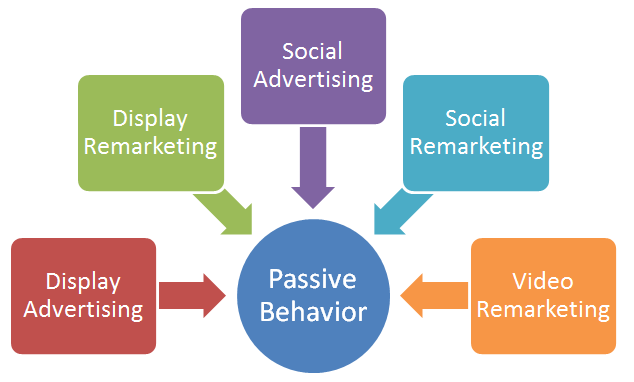
  • Standard Display Remarketing: “Standard” means remarketing that you can utilize via Google AdWords or another third-party platform.

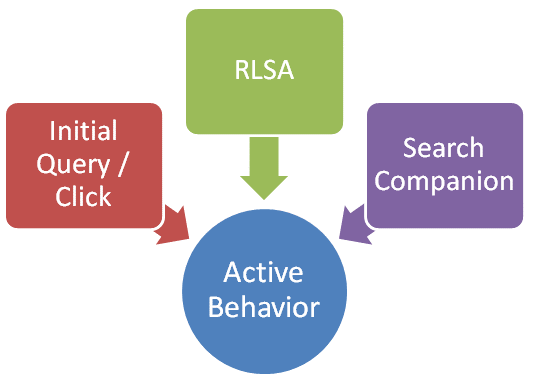
  • Remarkeing Lists for Search Advertisers (RLSA): This tactic is available through Google AdWords. RLSA is also great for targeting competitor keywords for individuals who have visited your website previously. (They are looking at your competitors!)

  • Video Remarketing: AdWords now offers the option to remarket to people who visit your YouTube page or watch any of your videos.

  • Social Remarketing: Utilizing FBX to remarket on Facebook.

  • Facebook Custom Audiences: You may need to get in front of individuals who may have already converted (requested information, etc.). You can upload your email marketing lists into FBX and target these people on Facebook.

  • Search Companion: This tactic involves targeting the Google Display Network via search queries. This means you target specific queries on Search and your ad shows up on the Display Network.

Remember that all touch points are not created equal. Some tactics target users who are in a passive frame of mind and others target individuals for whom you may be top-of-mind (active behavior). Each of these tactics may have more value to your company and campaign. You will have to conduct some trial-and-error to get the right mix for your business.


Active Behavior


Active-lead-gen-behavior_Bruce-Clay-Inc


Passive Behavior


Passive-lead-gen-behavior_Bruce-Clay-Inc


The objective of these tactics is to stay visible to your audience. Or perhaps rattle their memory into action when they see your remarketing ad and they haven’t converted yet.


In the future, look for a discussion of how you can structure your campaigns to best utilize this strategy, along with how to establish tracking in order to establish which channels work best for your business.


Source: Bruce Clay


How to Create Persuasion Momentum with Sem

Ellen Breaks Twitter Record at Oscars

By Chris Crum

Ellen

A tweet from Ellen DeGeneres during the Oscars on Sunday night – a photo of her with eleven other celebrities from the audience (taken by Bradley Cooper) has set a new record for retweets.


It even crashed Twitter at one point (though those familiar with the “Fail Whale” know that’s not quite as big of an accomplishment).


Here it is:


If only Bradley’s arm was longer. Best photo ever. #oscars pic.twitter.com/C9U5NOtGap


— Ellen DeGeneres (@TheEllenShow) March 3, 2014


2,626,197 retweets and 1,329,296 favorites as of the time of this writing.


That’s a whole lot more than the previous retweet record holder, which was a tweet from President Obama, which has just over 780,000 retweets and close to 300,000 favorites.


Four more years. pic.twitter.com/bAJE6Vom


— Barack Obama (@BarackObama) November 7, 2012


According to Twitter, there were over 14.7 million tweets containing terms related to the Oscars telecast during the live show.


The envelope please….to @TheEllenShow – this is now the most re-tweeted Tweet with over 1 million RTs. Congrats!


— Twitter (@twitter) March 3, 2014


Twitter notes that Ellen’s follower growth was 47 times more than her average daily growth after the show.


Ellen’s tweet saw 254,644 tweets per minute (TPM). The other moments that drove the most Twitter conversation, according to the company, were: Ellen delivers pizza to the audience (158,159 TPM); and Gravity wins sixth Osacar – for film editing (135,330 TPM).


The most tweeted about nominees during the evening, according to the company, were Jennifer Lawrence, Brad Pitt, Alfonso Cuarón, Cate Blanchett and Sandra Bullock.


Films that got the most mentions were Gravity, Frozen, 12 Years a Slave, Dallas Buyers Club and The Wolf of Wall Street.


Images via Twitter


Source: WebPro News 1


Ellen Breaks Twitter Record at Oscars

Help Us Find the State of Seo

By Bas van den Beld

As you know we have a background in search, having been called “State of Search” for more than two years. And we write a lot about the topic of SEO as well. On top of that we like writing e-books and white papers. The newest e-book we are working on at the moment is a look at SEO: what is the State of SEO and where are things headed. Take for example the term SEO, is that still relevant?


We are looking at this from many different angles, with an e-book as result. For this we would like your input. We want to know how you think the State of SEO is. So we created a small survey. You can help us by taking about five minutes to fill in this survey. As a token of our thanks you will receive a copy of the report once it’s done!


While you are at it, can you help us find as many people as possible to fill this in? Both agency and in-house? Just tweet this:


Come and help out an fill in this 5 minute survey about SEO. I did and I’m now getting the report!
Click To Tweet – Powered By CoSchedule


So start filling in the survey!


Thank you so much!


Post from Bas van den Beld on State of Digital
Help us find the State of SEO


Source: State of Digital


Help Us Find the State of Seo

Top 5 Must Haves on a Small Ppc Campaign Budget

By Polly Pospelova

Top 5 must have

Managing AdWords campaigns well is time consuming, but here is a list of things you should do even on a small budget.


Eliminate ineffective keywords and ad groups


This tactic helps to achieve 3 things at the same time:


  1. decrease costs

  2. lower cost per conversion

  3. increase conversion rate.

To manage ineffective keywords properly you need to have conversion tracking setup and working properly in your AdWords (or Bing) account. It’s best to focus on each campaign or ad group separately because cost per conversion varies from campaign to campaign. If you don’t have much time, work at the account level


  1. Set the date range to the last 2-3 months.

  2. Go to keywords and sort them by cost in descending order.

  3. Review your top spending keywords one by one. If cost >= average cost per conversion (or cost per conversion you would consider acceptable) then pause that keyword.

  4. If there are no such keywords, go to ad groups tab, sort your ad groups by cost in descending order and if cost >= average cost per conversion then pause that ad group.

Choose devices and channels which are right for you


This tactic helps to cut costs and move your budget to a better converting channel. If your campaigns are limited by budget you can cut costs by opting out of search partners or mobile devices on the campaign level.


  1. Set the date range to the last 2-3 months.

  2. Go to ‘Campaigns’ tab and segment your data by ‘Network’ or ‘Device’:


  • Devices.Review costs and cost per conversion separately for desktops, tablets and mobile phones.If your cost per conversion is much higher or there are no conversions from a particular device, I would recommend not to show your ads on that device.(see example of a campaign where cost per conversion from mobile devices is almost double that from desktop computers)

    AdWords Campaign where cost per conversion from mobile devices is double the desktops


    Unfortunately, enhanced campaigns only allow you to opt out of mobile devices (it can be done on campaign settings tab). You cannot opt your campaigns out from showing ads on tablets, so you need to optimise your website for tablets as a matter or urgency.


    Remember, if you advertise on tablets but your website isn’t ready for tablet devices, you can waste up to 30% of your whole budget on traffic which will never convert.


  • NetworkSearch ads are eligible to show not only in Google search, but also on Google search partners too. Segmenting by ‘Network’ you will see how effective your advertising is on Google search partners websites.If your cost per conversion is higher or search partners don’t bring any conversions opt out of search partners (you can do it on the campaign settings tab):

    NetworkSearch ads


    All the same steps are available in Bing too. Bing shows performance broken down by device and network. Fortunately, Bing allows you to opt out from advertising on tablets if your website isn’t ready for these devices.


Use remarketing in search if it helps you to close the deal


Remarketing in search ads lets you show ads in Google search results but only those users who previously visited your website but didn’t convert. You can show a completely different message or improve on your original offer and be certain that nobody else but the users who already know you will see it. This feature is an absolute must for a mature advertiser. It delivers leads at very lost costs, which is important for small ppc budgets.


Leverage location targeting


You can target specifically those areas where your business operates. Leveraging geo targeting helps to increase performance and cut costs.


For example, if your customer audience is based in Ramsey, there is no need to target other cities.


To define your Geographical settings go to Settings, All settings and then Locations.


Define your Geographical settings in AdWords


Map


Know your negative keywords


Always analyse negative keywords before setting up a campaign with a small PPC budget. It will help to avoid wasting money and poor results at the start of a campaign.


There are many tools which can help you find your negative keywords. The best way to start your research is to use Google Keyword Planner or just Google search.


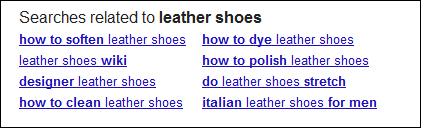
If you are selling ‘leather shoes’ in the UK just type it into Google search and predictive search will show you the terms associated with your search query. You will see straight away what is irrelevant. For example, you may want to add ‘philippines’ or ‘pakistan’ into your negative keyword list.


search query 1
search query 2
search query 3


Related search terms displayed at the bottom of search results are also very useful:


Related search terms in Google


The same tactics can also suggest relevant keywords you may have missed.


If your campaign has run for a while and accumulated history, review the search terms that brought your visitors to the site and find out if any of them are irrelevant.


Search terms report


Investing time into negative keyword research pays off, it helps to decrease cost and increase CTR.


Everyone has a different way of optimising AdWords accounts. There are hundreds of other things you can do to increase your reach, increase your conversion rate and lower your costs, however not all of them are quick or cheap fixes. Things like conversion optimisation, ROI optimisation or design and development of great landing pages take time and cost money. But if you cover the above basics, even in on small budget campaign, you will be pleasantly surprised with the results you get.


Post from Polly Pospelova on State of Digital
Top 5 Must Haves on a Small PPC Campaign Budget


Source: State of Digital


Top 5 Must Haves on a Small Ppc Campaign Budget

Sunday, March 2, 2014

Digital Marketing Research Publications for Week 9 2014

By Bas van den Beld

State of Digital wants to provide you with the best information out there. And in Digital things keep changing all the time, so it’s difficult to keep up-to-date. But we are here to help you!


Every Friday we will be giving you an overview of research done around the world, published on the web somewhere. Research you can then use in your marketing efforts, whether it’s optimising a campaign or making sure your superiors will walk the route you plan to walk.


Here’s the overview of research in week 8 and 9.


Digital Marketing General


Multitasking TV Viewers Primarily Focus on the Television


Devices such as smartphones, tablets, laptops, desktops and portable gaming systems have made it easy for consumers to multitask while watching television. However, a November 2013 study by TiVo found that three-quarters of US TV viewers were more focused on what was on the tube, even when using a second screen.


Read More >>>


Demographic Stats About US Millennials


Nielsen looked at the behaviour of US Millennials: from online to offline habits, structuring its analysis around some myth-busting findings.


Read More >>>


CMOs Aren’t Keeping Up With Their Own Social Media Spending Forecasts


Heady forecasts about social media spending are one thing (and they’re certainly an indicator of enthusiasm), but actual spending is another. And results from the latest edition of The CMO Survey from Duke’s Fuqua School of Business indicate a continued gap between plans and follow-through on the part of US CMOs.


Read More >>>


The State Of Consumers And Technology: Benchmark 2013, US


Forrester’s annual overview of US consumers’ behaviors and technology attitudes by generation, based on Forrester’s North American Technographics surveys and our ForecastView data.


Read More >>>


Branding


Men Open to New Brands; W-O-M and Ads Key for Awareness


More than 6 in 10 men aged 18-49 said they’re open to choosing new brands across several categories when shopping for the household, according to a new report from Defy Media. The study paints a picture of a more involved male shopper than some stereotypes would lead one to believe, with a majority of married men surveyed claiming to shop for groceries and household supplies more frequently than their spouses.


Read More >>>


What Happens After a Good or Bad Experience, 2014


Some 23% of consumers will give feedback directly to companies following a very good service experience, but 32% will do so following a very bad experience, finds the Temkin Group in newly-released survey results.


Read More >>>


Are Consumers “Falling Out of Love” With Brands?


A couple of new studies take a look at consumers’ relationships with brands, with one arguing that consumers are “falling out of love with brands” and that “brands are in crisis.” Indeed, Mindshare’s “Culture Vulture 2014” finds that only 47% of North American consumers last year agreed that they like to pass on interesting things they see or hear about brands, with that figure having steadily fallen over the past few years, from 66% in 2010.


Read More >>>


Social Media Marketing


The State of Social Marketing 2014


Socialbakers conducted a social media pulse check across 82 countries and 20 industries to discover what marketers are focusing on, and more importantly, what they’re not.


Read More >>>


Brands prefer Instagram 4x More than Vine for Twitter Posts


The blogosphere has recently been ablaze about Instagram and Vine’s destinies, after Instagram introduced its own video feature last June. Would users abandon Vine’s video service for Instagram? Or would the two be able to peacefully coexist?


Read More >>>


Consumers As Likely to Trust Foreign Secret Service Org.s As Social Networks With Their Data (PDF)


A new study released by the Global Research Business Network (GRBN) reveals that few consumers in the US and UK actively trust various types of organizations with their data.


Read More >>>


51% of Facebook Referrals Came From Mobile


Shareaholic, a content discovery and sharing platform, found in a recent report that 51 percent of Facebook referrals come from mobile.


Read More >>>


80% of UK users access Twitter via their mobile


Mobile is written into the DNA of Twitter. That’s underscored by new research from Nielsen that reports 80% of UK users access Twitter via their mobile device.


Read More >>>


77% of College Students Use Snapchat Daily


A new study found that more than three-quarters of college students — 77%, in fact — use Snapchat at least once per day.


Read More >>>


E-commerce


UK Online retail sales up 18% year over year


A surge in UK business-to-consumer (B2C) ecommerce sales in January 2014 reflected growing consumer and business confidence. According to data from Interactive Media in Retail Group (IMRG) and Capgemini, online retail sales increased 18% year over year.


Read More >>>


International


Internet and mobile platforms are driving growth in Sweden’s ad market


Digital expenditure is driving Sweden’s advertising market, and the internet will remain the largest single ad channel in 2014, according to the “Marknadschefsbarometer Q4 2013” issued by Dagens Media and Netigate – Sweden.


Read More >>>


What’s Next for Ecommerce in Spain?


Where is Spain’s retail ecommerce market headed in 2014? That’s what a December 2013 study by the Foro de Economía Digital and marketing agency Kanlli set out to learn.


Read More >>>


87% of American Adults Now Access the Internet (PDF)


Pew Research Center’s Internet & American Life Project has released the results of a new survey examining internet use in the US. The study finds that among adults, 87% use the internet, email, or access the internet via a mobile device


Read More >>>


Online Sharing Behaviors of Hispanic Consumers


A recent study released by ShareThis in partnership with Mindshare and Unilever contains some intriguing data regarding Hispanics’ propensity for social sharing, as well as the influence those sharers have.


Read More >>>


Advertising


Social Ads Proving to be Highly Effective


Social was a better bet than portals, networks, and exchanges last year for reaching users that can be consistently marketed to (“user quality index”), according to the latest quarterly “Global Media Intelligence Report” from Neustar Aggregate Knowledge.


Read More >>>


Mobile


UK Viewers Taking to TV on Tablets


eMarketer estimates that almost three-quarters of UK internet users—nearly 57% of the entire population—will watch video content via the internet at least monthly in 2014.


Read More >>>


More than Half of UK Smartphone Owners Use Their Phones in Stores


More and more UK consumers are reaching for smartphones while browsing in physical stores, according to a February 2014 report, “Agile Consumer 2013,” commissioned by Cheil Worldwide. Its research partner OnePoll conducted the study, which looked at a wide range of shopping behaviors involving smartphones, from general research to price-checking and purchasing, in Q4 2013.


Read More >>>


For Most Global Mobile Internet Users, Phones Are The Primary Device For Surfing the Web


6 in 10 mobile internet users from 14 key markets around the world say they typically go online to surf the web mostly (37%) or exclusively (23%) from their mobile phone, says InMobi in a new survey conducted by Decision Fuel and On Device Research.


Read More >>>


Tablet Web Browser Usage Patterns on a Typical Day


In a new report, Chitika has taken a look at how tablet usage – in this case web browsing only, not applications – fluctuates during a typical day. The analysis averaged out hourly ad impressions over a 2-week period from Chitika’s network for the iPad, Microsoft Surface, and Android tablets, reaching some fairly unsurprising but nonetheless interesting conclusions. Predictably, the iPad dominated in overall usage; each tablet sees very similar usage patterns.


Read More >>>


Analytics


CMOs: Most Projects Still Aren’t Using Marketing Analytics


Most projects fail to use available or requested marketing analytics, report American CMOs responding to the latest CMO Survey conducted by the Duke Fuqua School of Business. The study’s results indicate that on average, only 32.5% of projects use analytics – and that’s actually a slight improvement from the past couple of biannual studies, where usage has hovered around the 30% mark.


Read More >>>


See more research from other weeks here


Subscribe to our mailing list


* indicates required


Newsletters


});

}

function mce_success_cb(resp)

$(‘#mce-success-response’).hide();

$(‘#mce-error-response’).hide();

if (resp.result==”success”)

$(‘#mce-’+resp.result+’-response’).show();

$(‘#mce-’+resp.result+’-response’).html(resp.msg);

$(‘#mc-embedded-subscribe-form’).each(function()

this.reset();

);

else

var index = -1;

var msg;

try

var parts = resp.msg.split(‘ – ‘,2);

if (parts[1]==undefined)

msg = resp.msg;

else

i = parseInt(parts[0]);

if (i.toString() == parts[0])

index = parts[0];

msg = parts[1];

else

index = -1;

msg = resp.msg;


catch(e)

index = -1;

msg = resp.msg;


try

if (index== -1)

$(‘#mce-’+resp.result+’-response’).show();

$(‘#mce-’+resp.result+’-response’).html(msg);

else

err_id = ‘mce_tmp_error_msg’;

html = ‘


‘+msg+’

‘;


var input_id = ‘#mc_embed_signup’;

var f = $(input_id);

if (ftypes[index]==’address’)

input_id = ‘#mce-’+fnames[index]+’-addr1′;

f = $(input_id).parent().parent().get(0);

else if (ftypes[index]==’date’)

input_id = ‘#mce-’+fnames[index]+’-month’;

f = $(input_id).parent().parent().get(0);

else

input_id = ‘#mce-’+fnames[index];

f = $().parent(input_id).get(0);


if (f)

$(f).append(html);

$(input_id).focus();

else

$(‘#mce-’+resp.result+’-response’).show();

$(‘#mce-’+resp.result+’-response’).html(msg);


catch(e)

$(‘#mce-’+resp.result+’-response’).show();

$(‘#mce-’+resp.result+’-response’).html(msg);


// ]]>


Post from Bas van den Beld on State of Digital
Digital Marketing Research Publications for week 9 2014


Source: State of Digital


Digital Marketing Research Publications for Week 9 2014